

Pinterest for eCommerce Success: A 10-Year Case Study Analysis of What Actually Works
Have you ever wondered just how much Pinterest has changed for eCommerce over the past decade? When I first wrote about Pinterest case studies back in 2015, most eCommerce managers treated Pinterest as a “nice-to-have” platform. It was a place for visual inspiration, maybe a source of extra traffic, but rarely a serious sales channel.
Fast forward to 2025 and the role of Pinterest for eCommerce looks very different. Shopping features, verified merchants, short video, and paid advertising have changed how brands show up on Pinterest. This article revisits the brands from my original 2015 Pinterest case study roundup and examines some of today’s active players so you can see what changed, what stayed true, and what you should test next to build Pinterest success for your own ecommerce business.

How do you stack up for Pinterest?
Take this free, 2-minute quiz to get an honest assessment of your brand’s Pinterest potential. You’ll receive a personalised score and proven tactics I use to help my premium clients grow website traffic and sales with Pinterest.
Pinterest for eCommerce, Then and Now
Pinterest in 2015: The Inspiration Era
Back then, Pinterest was pure aspiration. Brands like Zola and Bob Vila built digital mood boards; food brands like EatSmarter and Simple Mills shared healthy recipes you wanted to save, but not always shop for. It was visual, aspirational, and pretty straightforward.
For businesses, Pinterest was a great way to get noticed organically. Shoppable pins were still in beta. Infographics, blog posts and group boards were how you drove traffic to your website. In those days, a common best practice was to post at least 10 times a day (or more!). A lot has changed since then.
Pinterest in 2025: From Discovery to Shopping Cart
Product Rich Pins, catalogues, and shopping ads now give brands a direct line from inspiration to checkout (although most purchase journeys are no longer that simple!). Advertising options have become much more sophisticated with advanced targeting, conversion tracking, and new ad formats designed to capture intent at every stage of the funnel. And, since Bill Ready’s arrival as CEO in 2022, Pinterest has doubled down on becoming a true shopping destination.
Tools like mobile deep linking, personalised shopping feeds, dynamic creative optimisation, and the Pinterest API for Conversions help brands track performance and improve attribution. Pinterest prioritises Verified Merchants and their product catalogues are more visible across the platform. AI-powered personalisation serves hyper-relevant products base on search intent and browsing behaviour, making it easier than ever for Pinners to move from “I love this idea” to “I just bought it.”
Pinterest Case Study Retrospective: Where Are They Now?
A decade later, tracking down my original Pinterest case study brands reveals interesting insights about platform longevity and evolving strategy. Of the eight brands I featured in 2015, several continue to thrive on Pinterest, while others show what happens when you don’t stay consistent on the platform.
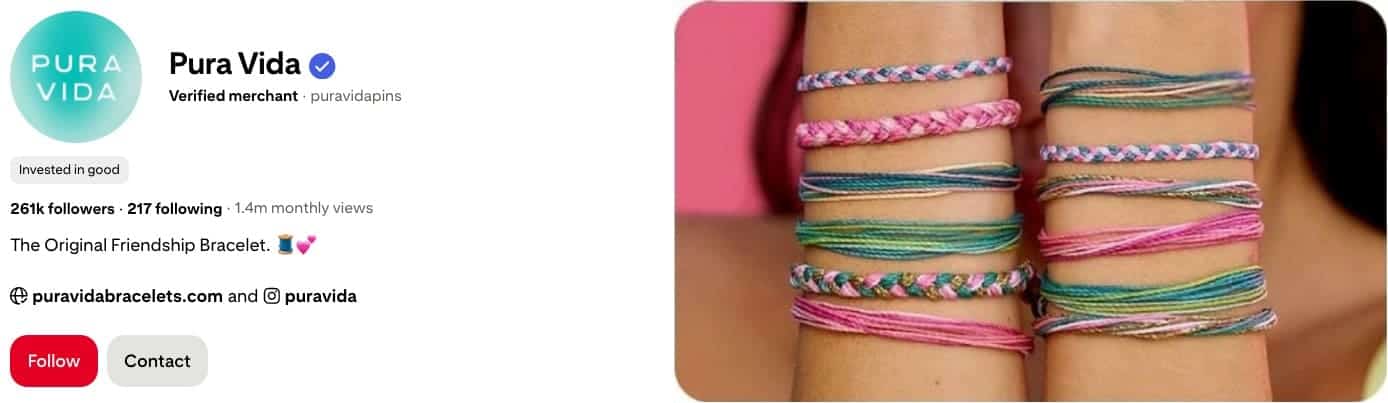
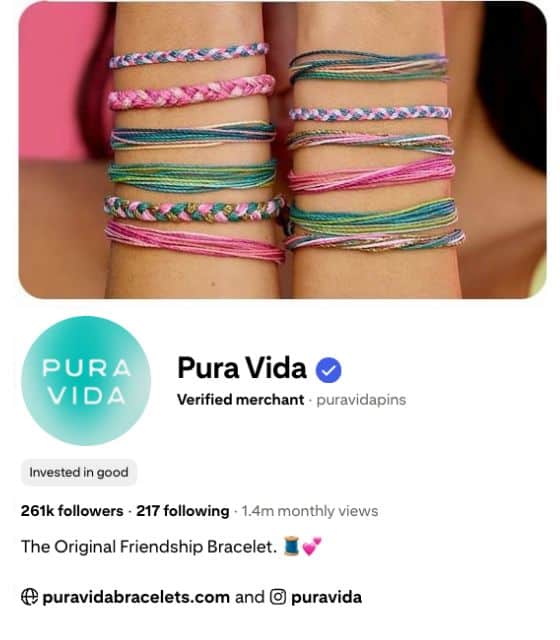
At the time, I spotlighted eight brands using Pinterest in creative ways – see list just below. Several are still going strong today, and half continue to maintain an active presence on Pinterest. Three of them (Zola, Pura Vida, and Bob Vila) have taken things a step further by becoming Verified Merchants, meaning their product catalogues are fully integrated and ready for shopping. Here’s a brief overview showing where each brand stands today:
Verified Merchants: Brands that connected their product catalogue
Brands that continue to drive traffic through evergreen content
The Pinterest Departures
While Pura Vida is the only brand still pinning organically on a regular basis, the others are far from invisible. In fact, they’re still generating impressive monthly view counts. Why? A few likely reasons:
- Their product pins show up automatically as shoppable content, thanks to catalogue integration
- Older, evergreen pins (especially helpful or inspirational ones) continue to perform well
- They may be running paid campaigns behind the scenes to stay visible
Key Insight: The Long Tail Effect
Many of these brands are generating millions of views despite minimal recent activity. This demonstrates Pinterest’s unique value: content has remarkable longevity. SEO-optimised accounts with evergreen content posted one or more years ago, are still driving traffic today. That’s simply impossible on Instagram or TikTok.
A well-optimised Pinterest account can keep driving results with very little ongoing effort, which makes it especially appealing for ecommerce brands working with limited resources.
New Generation Pinterest Success Stories
A new wave of UK brands are using Pinterest with much more intention. Compared to the early adopters, today’s playbook looks very different: content is sleeker, product catalogues feed straight into shoppable Pins, and both ad formats and measurement tools have evolved significantly.
If you manage an online store, you already know the challenge of balancing brand awareness with actual conversions. Pinterest is one of the few platforms that truly supports both. Here’s why:
So the question isn’t does Pinterest work? It’s how do you use it strategically and consistently?
To answer that, let’s take a look at a handful of British lifestyle brands with online stores that are doing a great job of marketing their products on Pinterest, growing their visibility, and reaching new customers.
Pinterest Case Studies: The New Playbook
I’m zooming in on six brands using Pinterest with real intention: Piglet in Bed, Pooky, Deliciously Ella, Wild Fawn Jewellery, Abbott Lyon, and Bridebook. For each one, you’ll see a quick “Playbook to adopt” that highlights what they’re doing well, plus a “Next best move” they could take to get even better results.
As you read, look out for the simple tactics you can apply to your own strategy, like board names that mirror how people actually search, a steady posting rhythm, and Pinterest-first images that show products in context. You’ll notice how Instagram content gets repurposed, and how tiny SEO lifts in titles and descriptions lead to more qualified clicks. Treat each mini spotlight like a bite-size Pinterest case study, then pick one idea to test yourself.
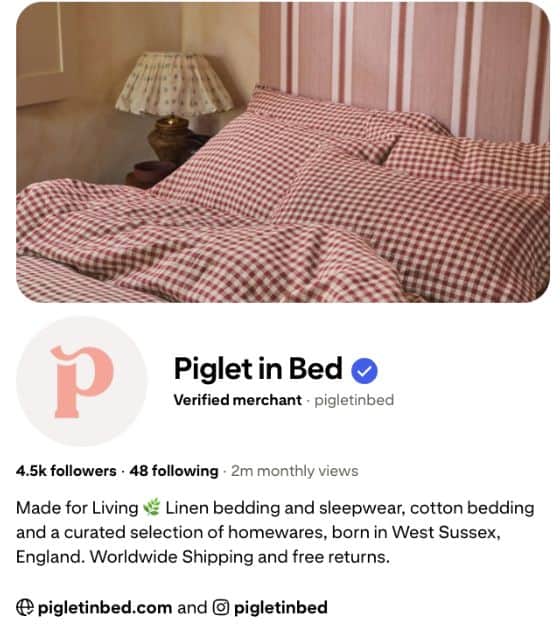
Piglet in Bed
I love that name! UK linen bedding and sleepwear brand with a tidy, mood-led aesthetic.
Pinterest Playbook to adopt: Calm lifestyle imagery, palette consistency, and clear product context that sends people to product pages. Piglet in Bed’s Instagram posts are automatically shared on Pinterest, feeding it fresh content every day.
Piglet in Bed’s next best move: Optimise board titles and descriptions for SEO and post fresh content not only to the Instagram board, but to the other boards too to increase organic website traffic from Pinterest.
Pooky
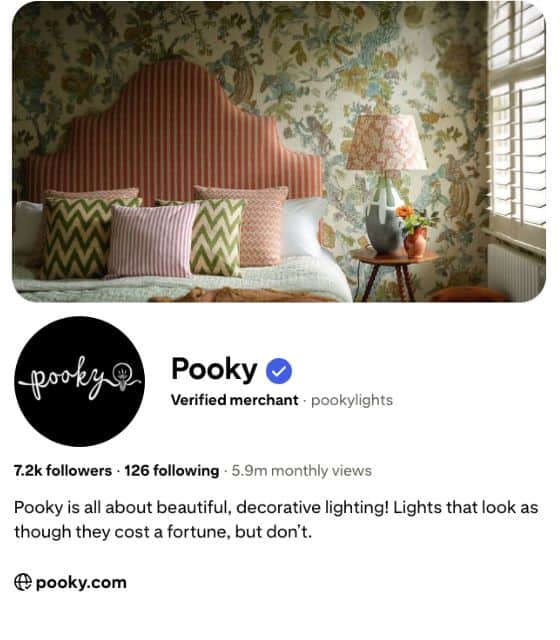
Decorative lighting with personality – “Lights that look as though they cost a fortune, but don’t”. Pooky’s boards feel like a room-by-room lighting guide, which makes browsing easy and fun.
Pinterest Playbook to adopt: Clear room and style boards, search-friendly titles, and fresh product shots that link straight to product pages. Regular new posts on different boards keeps the account active and the algorithm happy.
Pooky’s next best move: Connect Instagram to auto-publish IG posts to a dedicated Pinterest board. Then, repurpose the best ones into Pinterest-first 2:3 images or short videos and schedule them to relevant boards with SEO titles and descriptions.
Deliciously Ella
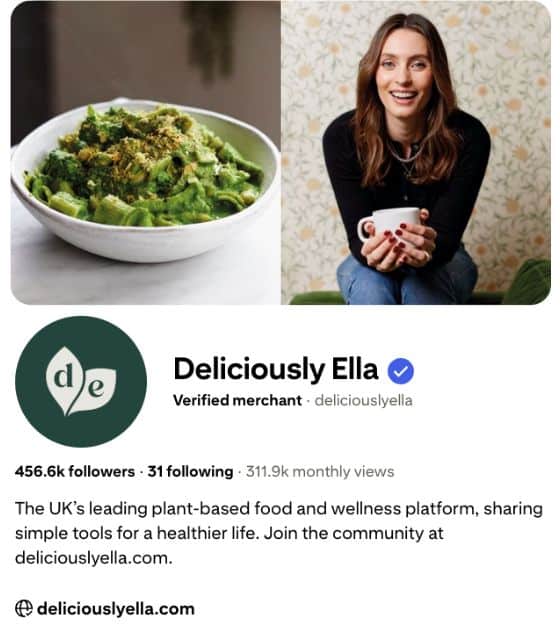
A leading plant-based food and wellness brand committed to making plant-based eating accessible, enjoyable, and inspiring.
Pinterest Playbook to adopt: Deliciously Ella’s clever use of Rich Pins means recipes come with ingredient lists right in the description, making them feel like ready-to-save recipe cards. Boards are cleanly organised by meal type and season, so it’s easy for pinners to find inspiration fast.
Deliciously Ella’s next best move: Link Instagram for an automatic flow of fresh content to bump up organic traffic and experiment with Pinterest ads to increase traffic and sign-ups for free membership trials.
Wild Fawn Jewellery
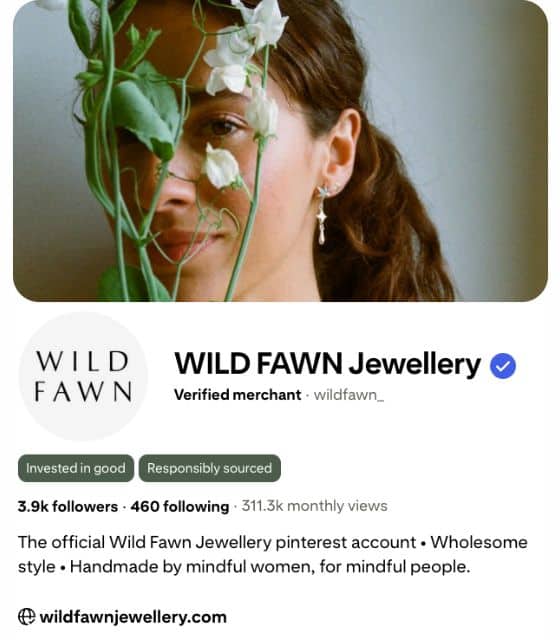
Guilt free jewellery, London-made, ethical jewellery with a timeless aesthetic.
Pinterest Playbook to adopt: Ethical vibe of the account matches the brand perfectly. Clear category boards for rings, earrings, and gifts. Wild Fawn’s photography is cohesive and elegant.
Wild Fawn’s next best move: Optimise board titles and descriptions for SEO and connect Instagram to automatically publish those beautiful jewellery shots on Pinterest too. Avoid posting third party content. Focus uniquely on own content for guaranteed site traffic growth!
Abbott Lyon
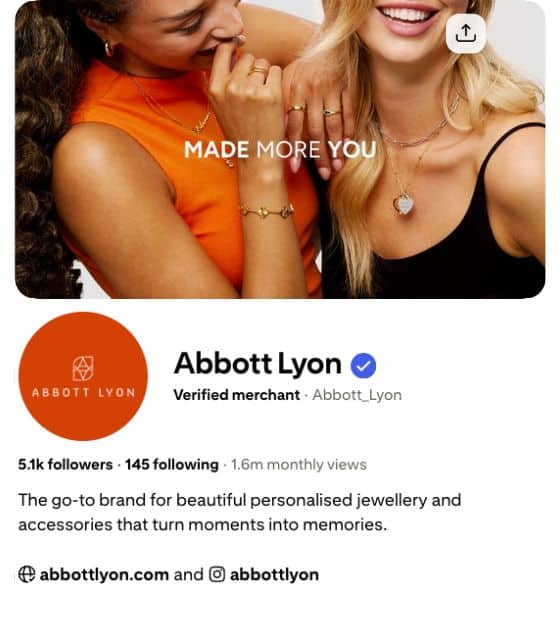
Stylish personalised jewellery and accessories, designed in-house with trend-led drops that feel gift-ready.
Pinterest Playbook to adopt: This Pinterest account feels lively and current. Abbott Lyon’s Instagram posts are automatically shared on Pinterest, feeding it fresh content every day.
Abbott Lyon’s next best move: Refresh board titles to match how shoppers search. Repurpose auto-published Instagram posts into Pinterest-optimised, SEO-friendly pins, and post them on other relevant boards. Doubling up content is fine when the context fits, as long as cadence stays tasteful.
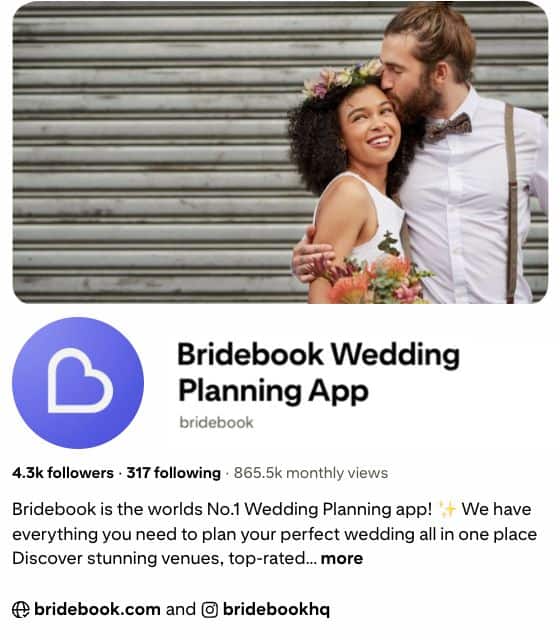
Bridebook
Wedding planning app that help couples organise their big day.
Pinterest Playbook to adopt: Bridebook structures boards to match the wedding planning journey, using search-focused titles and pins. They publish only their own content. Their Instagram board has an SEO title, not just “Social”. A simple SEO upgrade most brands miss.
Bridebook’s next best move: Their organic foundations are solid. However, with around 60 boards, upkeep is heavy, which likely explains why only a third were refreshed in the past year. A focused clean up will lift performance and make things easier to manage.
Pinterest for eCommerce: 3 Simple Next Steps
Feeling inspired by these brands’ Pinterest marketing activity? If you already have a Pinterest Business account and want some easy wins to increase performance, here are three tactics that will keep your account fresh without daily management. Each one takes little time to set up, compounds over the next few weeks, and increases the chance of your content showing up in Pinterest feeds to help you build organic momentum.
Link Instagram to your Pinterest account for an automatic flow of fresh content. It’s an easy way to keep your account active and grow organic traffic. Optional extra: Once a week, repurpose them as Pinterest-first 2:3 images or short videos and schedule them to the most relevant boards with clear titles, descriptions, and product links.
Connect your product catalogue and apply for the Verified Merchant badge. This turns every product in your catalogue automatically into a Pin. These Pins are indexed by Pinterest making they organically discoverable in searches and home feeds – no ad spend required.
Name boards the way people search. Examples: small hall storage, layered necklaces, 15 minute dinners, wedding checklist by month. Write one clear sentence in each board’s description that includes keywords you’re targeting.
Pinterest for eCommerce FAQ
How do I become a Pinterest Verified Merchant?
Apply through Pinterest Business Hub on your Pinterest account. Before you do, make sure you’re all set: connect your product catalogue to Pinterest, ensure the Pinterest tag is properly installed on your website, and check that you meet Pinterest’s Merchant Guidelines.
How long does it take to see results from Pinterest for ecommerce?
It depends on whether you focus on organic, paid, or both (Pinterest works best when you combine the two). Paid campaigns can show results within weeks, especially when retargeting warm audiences. Organic growth takes longer, usually three to six months, as Pinterest indexes content and builds trust. Because of how people use the platform, conversions tend to take longer than on other channels. In nearly every Pinterest case study, the strongest results come from brands that gave the platform time to work its magic.
Should I focus on organic Pinterest or paid ads first?
Start with organic content to understand your audience and what resonates, then use paid ads to target specific audiences, interests and keywords. When your business is new to Pinterest, publishing organic content is very effective to collect data to guide future paid ad campaigns. Organic posts and paid ads are very complementary.
What’s the difference between Pinterest and Instagram for ecommerce?
Pinterest and Instagram are both visual platforms, but people use them very differently. Pinterest is all about search and discovery. People go there for ideas, not conversation. That’s what makes it so powerful for reaching new customers. Instagram is more about sharing and connecting. Pinterest content also lasts much longer. Pins can drive traffic for months, even a year or more, because the platform acts like a search engine. Instagram posts, by contrast, usually peak within 48 hours.
Will Pinterest work for my online store?
Pinterest is a great fit for ecommerce brands with lifestyle products (home decor, fashion, food, beauty, or anything DIY). It’s especially powerful for businesses that play the long game, focusing on brand and product discovery rather than chasing quick sales. It’s one of the best platforms to bring new, high-intent visitors to your website. Conversions depend on factors such as content quality, campaign budget and your website’s conversion rate.
Curious how your brand stacks up?
How much should I budget for Pinterest marketing?
Budgeting for Pinterest ads depends on your goals, market, and timing. US campaigns typically run at $50-$100 per day, while £30-£80 is common in the UK. Expect costs to rise during Q4 or in crowded niches. Start by testing with a smaller daily spend, then scale once you know what works. Brands with precise targeting and strong organic engagement can often succeed with lower budgets.
Final Thoughts
Pinterest for ecommerce has come a long way from its digital scrapbook roots. Whether you’re inspired by the steady growth of brands like Deliciously Ella or just getting started with a simple board refresh, there are some great tips to take away from each Pinterest case study shared here. If this roundup has sparked a few ideas, pick one or two tactics to test first. Keep it simple, stay consistent, and remember, Pinterest rewards the brands that show up with helpful, inspiring content over time. The next standout Pinterest case study could be yours!
Questions?
If you’d like to know more about Pinterest or how it might work for your brand, feel free to get in touch or connect on Linkedin.
Discover Your Brand’s Pinterest Potential in Just 2 Minutes
Most of my clients were once asking themselves exactly the same question. Now they’re generating consistent traffic and seeing real ROI from their Pinterest marketing efforts.
Pinterest might just be perfect for you. Meet your next top traffic source?
This Quick FREE Quiz Analyses:
Pin for later!

Mary Lumley – Pinterest Marketing for eCommerce & Travel / Pinterest for eCommerce Success: Case Study Insights on What Actually Works
